QINGDAO-Shandong, China May 27 – Before travelling to China, I had heard countless stories about the Asian giant — its huge population, rapid economic growth and technological advancement.
But nothing truly prepared me for what I encountered after landing in the capital, Beijing as part of a delegation of 30 Kenyan journalists attending a media exchange programme organised by the Research and Training Institute of the National Radio and Television Administration (NRTA).
For 16 days, we travelled through Beijing and Qingdao in eastern Shandong Province, learning about China’s media industry, technology and culture.
Yet beyond the official visits, seminars and presentations, it was everyday life in China that left the deepest impression on me.
The first thing that stood out was the extraordinary level of order and discipline.
In China, order appears deeply embedded in daily life. Everything moves in a calm, structured and organised manner.
Unlike Kenya, where traffic chaos is often part of everyday experience, motorists in China strictly obey traffic rules, even late at night when roads are nearly empty.
During several midnight walks in Qingdao, I watched drivers patiently stop at red lights despite the absence of police officers or traffic marshals.
Public transport was equally organised and remarkably quiet.
Whenever we boarded the metro, passengers remained largely silent, most absorbed in their phones throughout the journey.
In many instances, the Kenyan delegation was the loudest group inside the train coaches.
One colleague from Kenya Broadcasting Corporation jokingly remarked that Qingdao looked “too perfect” — almost like a futuristic city from a science fiction film.
Respect for Institutions
Another major culture shock was the respect many Chinese people appear to have for institutions and leadership.
Open criticism of government is less common in public spaces, and many people seem cautious when discussing political matters openly.
While criticism of policies still exists, it is often expressed carefully and quietly.
From my interactions, one thing became clear: many Chinese people strongly value discipline, social order, national unity and respect for institutions.
Technology Everywhere
China’s level of technological advancement felt almost unreal.
Artificial intelligence is already integrated into nearly every sector — media, transport, communication, retail and entertainment.
During visits to Chinese media organisations, we witnessed AI-powered news anchors presenting bulletins almost indistinguishable from human presenters.
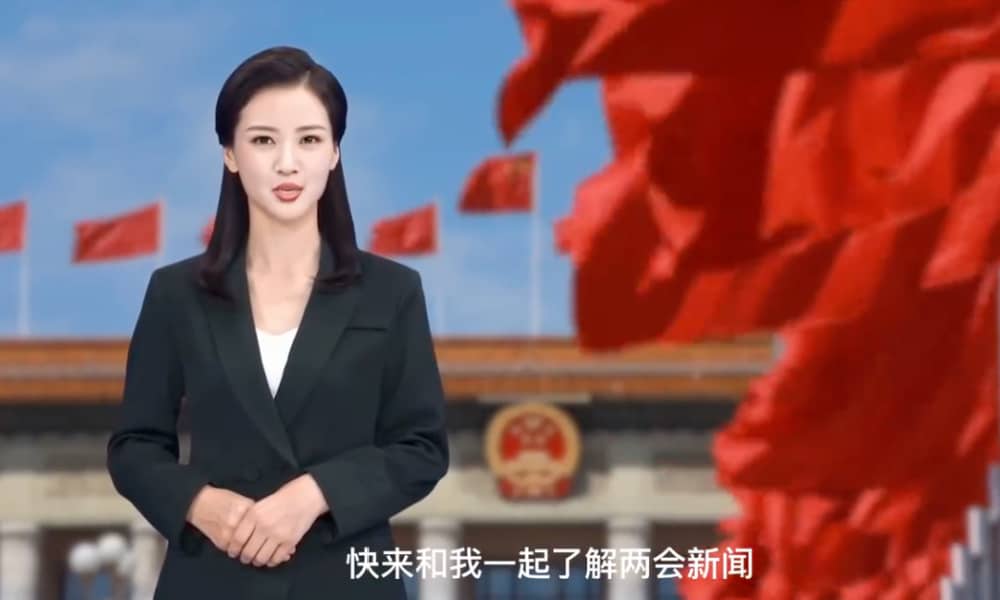
We also encountered AI-generated films and videos so realistic that distinguishing between machine-generated and human-created content became increasingly difficult.
One executive from Luoshan Media admitted that concerns about artificial intelligence replacing jobs also exist in China.
However, the focus, he explained, is on ensuring workers are equipped to work alongside AI rather than be displaced by it.
Technology is deeply woven into everyday life.
Even language barriers are increasingly being solved through mobile translation applications, which helped many of us communicate with locals who spoke little or no English.
Despite the language differences, I found Chinese people warm, welcoming and consistently willing to help.
Food and Cultural Differences
Food became another memorable part of the experience.
Rice and eggs appeared to be among the most common meals, although chicken dishes were also widely available.
Still, there was one thing many Kenyan delegates missed dearly — ugali and kienyeji vegetables.
The absence of familiar Kenyan meals left several members of the delegation homesick and nostalgic.
Although stories about unusual Chinese cuisine often dominate international conversations, I personally never encountered many of the exotic meals frequently mentioned online.
Overall, the food experience remained enjoyable despite the occasional longing for home cooking.
Clean Cities and Efficient Transport
China’s transport infrastructure left me genuinely amazed.
The roads are modern, smooth and extremely well maintained.
In some areas, specialised trucks literally wash roads using water and soap.
The underground railway system is efficient, affordable and highly organised — the kind of infrastructure many developing countries, including Kenya, still aspire to build.
I was equally struck by how green the cities are.
Both Beijing and Qingdao are filled with trees, flowers and beautifully maintained public spaces.
Before travelling, I had imagined China as heavily polluted and overcrowded.
Instead, I found modern cities filled with greenery, impressive architecture and carefully planned urban spaces.
The buildings are massive, unique and beautifully designed, reflecting a country deeply invested in construction, innovation and urban development.
Even with a population exceeding 1.4 billion people, there was remarkably little visible chaos.
Another striking observation was the condition of vehicles on the roads.
Most cars appeared new or extremely well maintained, with very few damaged vehicles visible.
I was also surprised by the apparent low levels of petty crime.
In many supermarkets and public spaces, there were no aggressive security checks like those commonly seen elsewhere.
People walked freely into stores carrying bags and luggage.
At the same time, surveillance cameras were everywhere.
Almost every street, building and public area appeared heavily monitored through CCTV systems.
According to our hosts, corruption remains one of China’s major challenges, but authorities continue to pursue aggressive anti-corruption measures.
As the programme approached its conclusion, one thing became increasingly clear: my first experience in China completely transformed many of the perceptions I previously held about the country.
From the advanced technology and disciplined society to the hospitality of the people, the journey became far more than a professional exchange programme.
It became a deeply personal learning experience.
Most importantly, the visit highlighted the growing relationship between Kenya and China — a partnership that continues to shape infrastructure, technology, media and cultural exchange between the two countries.
For me, China was not simply another destination.
It offered a glimpse into what the future could look like.