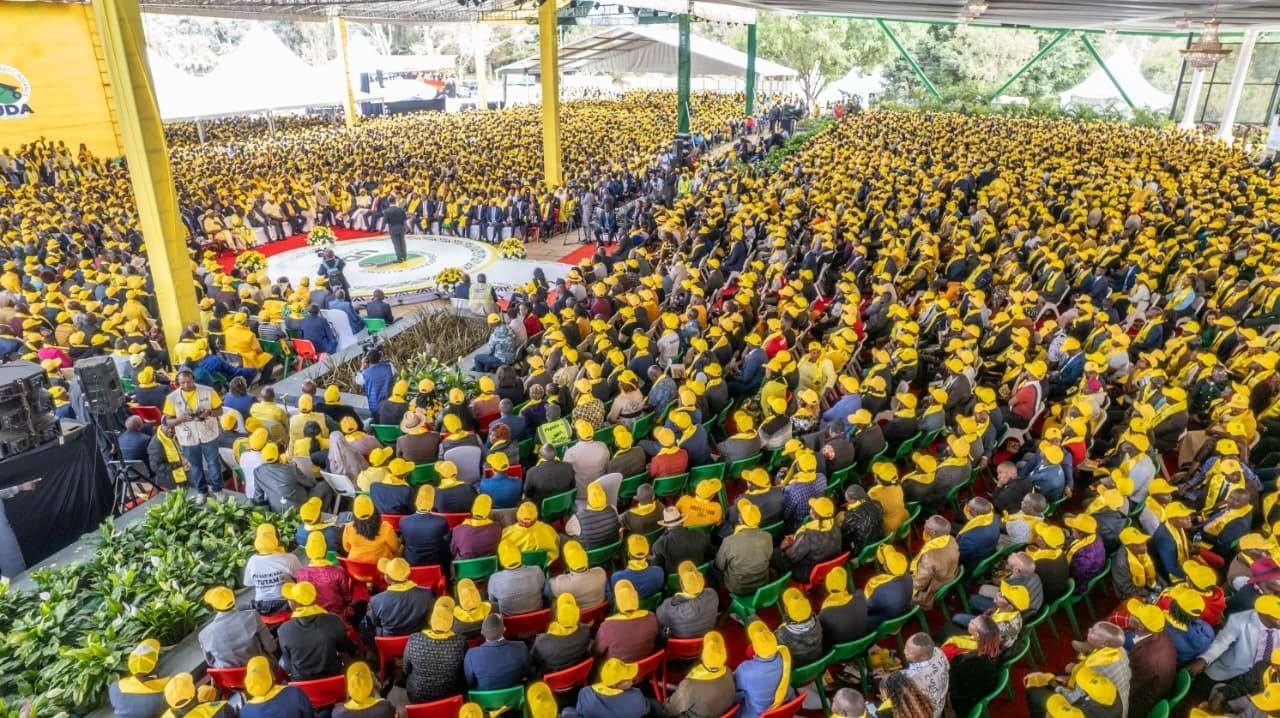
NAIROBI, Kenya Feb 4-Deputy President Kithure Kindiki rallied United Democratic Alliance (UDA) aspirants to anchor their campaigns on the party’s 2022 manifesto, insisting that loyalty to promised commitments remains the core test of leadership under the ruling coalition.
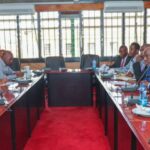
Speaking during a meeting with UDA aspirants, Kindiki said the Kenya Kwanza administration was deliberately focused on full, one hundred percent implementation of its manifesto, urging leaders to clearly articulate what was promised, what has already been delivered, and how outstanding pledges will be completed.
“At the time we asked Kenyans for their votes, we presented a clear manifesto, and that manifesto continues to guide our leadership,” Kindiki said.
The Deputy President said the economy has steadily stabilized since President William Ruto took office in 2022 amid post-COVID economic strain.
He noted that inflation had dropped from 9.6 per cent to about 4.4 per cent, the shilling had strengthened from about 165 to around 128–129 against the US dollar, and foreign exchange reserves had more than doubled to $12.1 billion.
“Today, inflation has declined to about 4.4 percent, the shilling has stabilized at around 128/129 to the dollar, and foreign exchange reserves have more than doubled to 12.1 billion dollars, restoring macroeconomic stability,”Kindiki stated.
Sectoral Gains
Agriculture, which supports more than 70 per cent of Kenyans, was highlighted as a key pillar of the administration’s agenda. Kindiki said government intervention had reduced fertiliser prices from about Sh7,000 per bag in 2022 to roughly Sh2,500, significantly lowering production costs for farmers.
According to the Deputy President, maize production has risen from 44 million bags in 2022 to 67 million bags in 2024 and is projected to hit 75 million bags in 2025.
He also cited improved returns in key value chains, with coffee prices rising from about Sh70 per kilogram to between Sh120 and Sh160, and sugar production increasing from 472,000 to 815,000 metric tonnes, cutting imports by 70 per cent.
In the livestock sector, Kindiki said milk production had grown from 4.6 billion litres to 5.3 billion litres, while dairy exports had nearly doubled to Sh8.9 billion. Meat exports, he added, had increased by 45 per cent to Sh12.9 billion. He pointed to the near completion of the Kenya Leather Industrial Park as a boost for value addition and farmer incomes.
The Deputy President also highlighted investments in the blue economy, including Sh3.2 billion in grants to fishermen and cooperatives along the Indian Ocean and Lake Victoria, alongside new landing sites, cooling facilities and testing laboratories aimed at reducing post-harvest losses.
On education, Kindiki said reforms guided by a presidential working party had expanded the sector’s budget from Sh500 billion in 2022 to Sh702 billion. He cited the employment of 100,000 teachers, construction of 23,000 classrooms and 1,600 laboratories, and a sharp rise in TVET enrolment from 297,000 to 718,000 learners.
In health, he said the transition from NHIF to SHIF Taifa Care had expanded coverage from seven million to 29.2 million Kenyans, supported by modern equipment and more than 107,000 community health promoters nationwide.
Kindiki said job creation remained a central focus, with affordable housing, markets, hostels and institutional housing projects spread across 235 active sites. He said nearly Sh800 billion worth of contracts were underway, employing about 500,000 young people, with a target of one million by the end of the year.
Digital and overseas employment opportunities, he added, had expanded through 30,000 kilometres of fibre optic cable, over 700 ICT hubs and labour agreements with 13 countries, resulting in 538,000 Kenyans working abroad and a more than $1 billion increase in diaspora remittances over three years.
Turning to infrastructure, the Deputy President said stalled road projects dating back to 2014 had been revived after the government cleared Sh190 billion in pending bills. He said resources had been secured to complete 6,000 kilometres of roads and that the National Infrastructure Fund would drive an ambitious expansion, targeting 28,000 kilometres of new roads in seven years.
Kindiki also announced plans to extend the railway from Naivasha to the Uganda border, with President Ruto expected to break ground on the Naivasha–Malaba line, financed largely through domestic resources to reduce reliance on debt.
He said the government was mobilising domestic savings to reach Sh1 trillion to fund high-return projects, describing the strategy as key to restoring national dignity.
“To finance development sustainably, the government is mobilizing domestic savings to reach one trillion shillings, enabling investment in high-return infrastructure projects. This approach reduces reliance on foreign borrowing and restores national dignity by building the country using its own resources,”Kindiki expressed.